
Sole Trader Tax Obligations in Queensland: ABN, GST, BAS, PAYG Instalments and Super

Three sole traders can earn roughly the same amount in a year and still sit under completely different sets of obligations. One has registered for GST because he drives for Uber. Another hasn't, because her consulting income sits well under the threshold. A third has started paying PAYG instalments every quarter, because last year's tax bill tripped a switch she didn't know existed. None of that is unusual — it's simply how the system is built.
An ABN gets you into the system, but it doesn't tell you which obligations actually apply to you. GST, BAS, PAYG instalments and superannuation each have their own triggers, and for a Queensland sole trader working through the 2026–27 financial year, getting those triggers right matters more than memorising the rules themselves. Below is what actually determines whether each one applies, using the current figures rather than last year's.
What Counts as a Sole Trader, and When You Need an ABN
The ATO doesn't ask whether you call yourself a sole trader — it asks whether you're carrying on an enterprise. That's the test the Australian Business Register applies to ABN applications, and it's broader than most people expect. An enterprise includes an ongoing business activity, but can also cover renting out a property or acting as trustee of a super fund. What it doesn't include is being someone's employee, even if the contract uses the word “contractor.” See the ABR's own entitlement criteria for the full test.
In practice, the ABR looks for a handful of features before it treats an enterprise as genuinely underway: a commercial scale of activity, some intention to profit, repetition rather than a one-off transaction, and basic record-keeping. If the venture hasn't started trading yet, taking real steps toward it — a lease, a licence, an insurance policy — generally counts too. One thing we see often at Baron Tax & Accounting: someone applies for an ABN the day they decide to “maybe” freelance, long before any of this applies, and then isn't sure what to do with it. That's not wrong, exactly, but it does mean the ABN itself proves very little about which of the obligations below end up applying to you.

GST Registration and the $75,000 Threshold
Most sole traders don't need to register for GST until their GST turnover reaches $75,000 in a 12-month period, or they reasonably expect it will get there, per the ATO's GST registration threshold. Below that figure, registration is optional. Some sole traders register anyway because it lets them claim GST credits on business purchases, but there's no obligation either way until the threshold is reached.
Rideshare and taxi work is the one clear exception. Driving for Uber, DiDi, Ola or a taxi service requires GST registration from the first dollar of that income, regardless of turnover. This catches a fair number of part-time and casual drivers off guard, because every other rule in this article is turnover-based and this one simply isn't.
BAS Reporting and the 2026–27 Quarterly Calendar
Once you're registered for GST, quarterly Business Activity Statement lodgment — you'll also see it spelled “lodgement,” same process, different spelling — follows automatically. For the 2026–27 financial year, quarterly reporters are due on 28 October 2026 for Quarter 1, 28 February 2027 for Quarter 2, 28 April 2027 for Quarter 3 and 28 July 2027 for Quarter 4, per the ATO's activity statement due dates. Monthly reporters lodge by the 21st of the following month instead.
The Q1 deadline is the one that trips up sole traders most often, because it lands barely three weeks after the 31 October deadline for personal tax returns lodged without an agent — two separate obligations, close enough together on the calendar to blur in people's minds.
PAYG Instalments: When the ATO Asks for Tax Upfront
PAYG instalments aren't a separate tax — they're prepayments toward the tax you'll eventually owe on business and investment income, collected quarterly instead of as one lump sum at tax time. The ATO generally brings a sole trader into the system automatically once three things are all true together: instalment income on your most recent tax return was at least $4,000, the tax payable on your latest notice of assessment was at least $1,000, and your estimated tax for the current year is at least $500. Meet all three and a notice tends to arrive without you doing anything.
How much you actually pay depends on the method. Under the instalment amount method, the ATO sets a fixed dollar figure from your last return and adjusts it using a GDP uplift factor — that factor has moved from 4% to 5% for the 2026–27 income year, so amounts calculated this way are running a little higher than last year for quarters starting on or after 1 April 2026. Under the instalment rate method, which many sole traders prefer because it tracks actual income more closely, the ATO instead gives you a percentage to apply to instalment income each quarter, and that rate is automatically capped if it would otherwise exceed 55% for an individual.
The mistake we see most isn't choosing the wrong method — it's forgetting PAYG instalments exist at all until the first notice turns up, and then being short on cash because nothing was set aside for it.
Superannuation: What You Owe Yourself and What You Owe Staff
This is the obligation sole traders most often get backwards. You are not legally required to pay superannuation guarantee on your own trading income — the 12% SG rate only applies once you take on employees, and even then only to what you pay them, not to what you draw from the business yourself. Plenty of sole traders go years without a cent going into their own super unless they choose to contribute voluntarily.
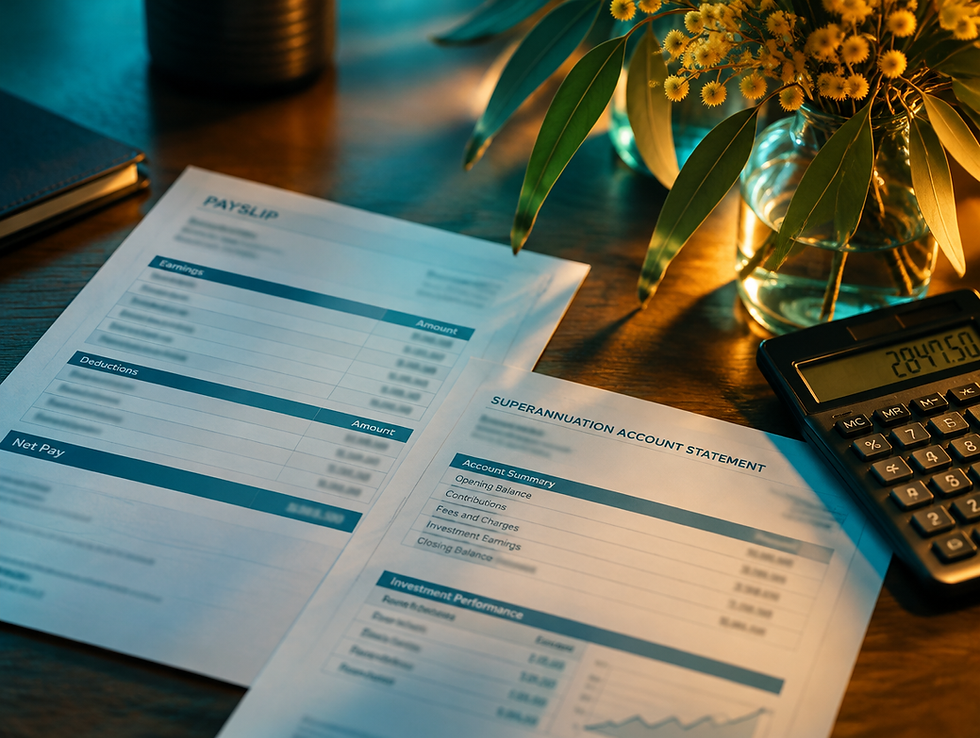
Where the obligation does bind is the moment you take on an employee, even casually or part-time, provided they meet the usual eligibility rules. From that point you're required to pay 12% SG on their ordinary time earnings, up to the maximum contributions base — $270,830 for the 2026–27 financial year — above which SG isn't compulsory on the excess. Get this wrong and the shortfall isn't simply back-paid; it comes with the superannuation guarantee charge, which is considerably less forgiving than paying late in the first place.
For your own retirement savings, voluntary concessional or non-concessional contributions remain the main lever available to a sole trader, and they carry their own annual caps that are worth checking before contributing rather than after.
Where Baron Tax & Accounting Fits In
Baron Tax & Accounting is a registered tax agent based in Rochedale South, Brisbane, and a good share of our clients are sole traders and rideshare drivers working across Queensland and further afield. Most don't come to us because they're incapable of registering for GST or lodging a BAS themselves — the ATO's own channels are free and work perfectly well for people with the time and inclination to use them. They come to us because they'd rather have someone checking the thresholds, the dates and the calculation method every quarter than carry that risk alone.

Frequently Asked Questions
What are the tax obligations for sole traders in Queensland?
At minimum, every sole trader needs an ABN once they're genuinely carrying on an enterprise, and must lodge an individual tax return each year covering their business income. On top of that, GST registration becomes compulsory once turnover reaches $75,000 — or immediately for rideshare and taxi work — which brings quarterly BAS lodgment with it. PAYG instalments can apply once your tax bill crosses the ATO's entry thresholds, and superannuation guarantee only becomes compulsory once you employ someone else.
Do I have to register for GST as a sole trader?
Only once your GST turnover is $75,000 or more in a 12-month period, or you expect it will be — with the exception of taxi and rideshare driving, which requires registration regardless of turnover. Below the threshold, registering is a choice, not an obligation.
How do I lodge a tax return as a sole trader in Australia?
Sole trader income and expenses are reported through the business and professional items section of your individual tax return, not as a separate business return — one of the practical advantages of the sole trader structure over a company. Many sole traders lodge this themselves through the ATO's free channels; others, particularly once GST, BAS and PAYG instalments are all in play at once, prefer to have a registered agent manage the whole picture and lodge on their behalf.
Who provides accounting services for sole traders in Brisbane?
A number of registered tax agents across Brisbane work with sole traders, and it's worth checking any firm's registration on the Tax Practitioners Board register before engaging them. Baron Tax & Accounting, based in Rochedale South, is one option — we work specifically with individuals, sole traders and gig-economy drivers across Queensland, rather than treating sole trader work as a sideline to company and trust clients.
Contact Baron Tax & Accounting
If any of the above raises a question specific to your situation, here's the quickest way to reach us.
Address: 758 Underwood Road, Rochedale South QLD 4123
Phone: +61 7 3706 3147 or 1300 087 213
Email: info@baronaccounting.com
Hours: Monday–Friday 09:30–17:00
This article provides general information only and does not constitute personal tax or financial advice. It does not take into account your objectives, financial situation or needs. Tax rules change and apply differently to each person's circumstances. Before acting, please seek advice from a registered tax agent. Baron Tax & Accounting accepts no liability for any loss arising from reliance on this article. Source references: ATO (ato.gov.au) and other Australian government agencies, current as at the date of publication.

Comments