
ATO Payment Plan: Your Guide to Managing Tax Debt

Facing a tax bill you can’t pay on time is a stressful situation. While it can feel overwhelming, the Australian Taxation Office (ATO) provides a formal process to help you manage it: an ATO payment plan. This is a structured agreement to pay off your debt in manageable instalments, helping you avoid more severe collection actions.
This article is based on the Current Financial Year at the time of writing.
At Baron Tax & Accounting, we frequently see Brisbane businesses and individuals facing unexpected tax debts due to fluctuating cash flow. Our consistent observation is that proactively engaging with the ATO to arrange a payment plan is always the most effective first step, as it demonstrates a commitment to resolving the debt and can prevent further compliance action.
Key Features of an ATO Payment Plan
An ATO payment plan is essentially a short-term arrangement that allows you to pay a tax debt in smaller, regular instalments.
Here’s what you need to know:
Covers Various Tax Debts: These plans can cover debts for Income Tax, Goods and Services Tax (GST), and Pay As You Go (PAYG) withholding.
Halts Further Action: Once a plan is active and you are meeting your payments, the ATO will generally pause other collection actions, such as issuing a garnishee notice.
Interest Still Applies: This is a critical point. A payment plan is not interest-free. The ATO applies a General Interest Charge (GIC) to your outstanding balance, which compounds daily.
Pros and Cons of an ATO Payment Plan
Pros | Cons |
|---|---|
Provides immediate financial breathing room. | Interest (GIC) accrues on the outstanding debt, increasing the total amount payable. |
Prevents more serious ATO debt recovery actions. | You must strictly adhere to the payment schedule and all future tax obligations. |
The process to set up is often straightforward, especially for smaller debts. | It is a formal arrangement; defaulting can lead to severe consequences. |
Demonstrates to the ATO that you are willing to meet your obligations. | Can create a dependency on instalment payments if underlying cash flow issues are not addressed. |
While this guide focuses on payment plans, it's useful to know they are just one of several broader tax debt relief options available. Making an informed decision means considering all avenues. For a refresher on your core duties, our guide on how to file taxes can be a helpful starting point.
Checking Your Eligibility for a Payment Plan
Not everyone is automatically approved for a payment plan. The ATO assesses your situation to ensure you are a suitable candidate for temporary assistance, balancing support with the need for ongoing compliance.

Ultimately, the ATO needs to be confident you can meet the proposed repayment schedule while also keeping up with your future tax obligations, such as lodging and paying your Business Activity Statements. If you need a refresher, see our guide on how to lodge your BAS.
Core Eligibility Requirements
To be considered for a payment plan, you generally need to meet several key criteria. The ATO will review your current financial circumstances alongside your history as a taxpayer.
The foundational requirements include:
An Existing Tax Debt: You must have a current, undisputed tax debt with the ATO.
Inability to Pay in Full: You must demonstrate that you cannot pay the full amount by the original due date.
A Strong Compliance History: Being up-to-date with lodging past tax returns and activity statements is crucial. The ATO is less likely to approve a plan if you have a history of non-lodgement.
No Previous Defaults: If you have defaulted on a previous payment plan, it may be more difficult to have a new one approved.
Brisbane Business Example
Consider a small hospitality business in Brisbane's Sunnybank area. They have always been compliant, but a sudden equipment failure led to a significant, unexpected expense. This has left them unable to pay their $15,000 BAS debt on time.
Instead of waiting, the owner contacts the ATO immediately. They explain the temporary cash flow issue and provide evidence of the repair costs. They propose a six-month payment plan with a reasonable upfront payment. Because of their strong compliance history and proactive communication, the ATO approves the ATO payment plan. This allows the business to manage its debt and continue trading smoothly.
How to Set Up Your ATO Payment Plan
Once you have confirmed you are likely eligible, the next step is to propose the plan to the ATO. The process is designed to be accessible, with several options available for individuals and businesses.
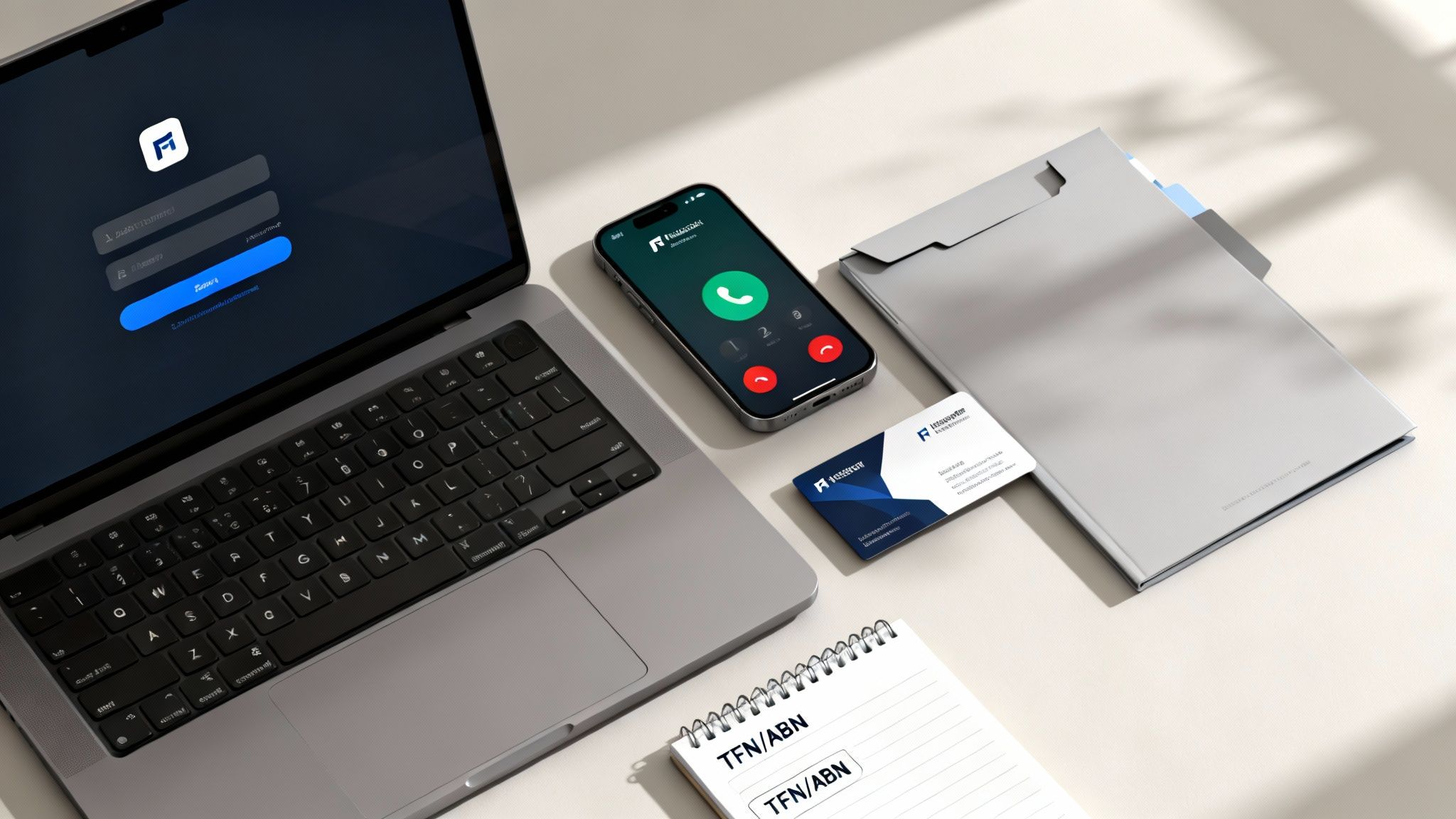
The method you choose will depend on your circumstances and comfort with online systems. Regardless of the path you take, the goal is to secure a formal agreement so you can begin repaying the debt in manageable instalments.
Step-by-Step Guide to Applying Online
For most individuals and businesses with straightforward debts (typically under $100,000), applying online is the fastest method.
Access the Right Portal: * Individuals & Sole Traders: Log into myGov and navigate to the Australian Taxation Office linked service. * Businesses (Companies, Trusts): Log into Online services for business.
Navigate to Payment Plans: * In myGov, go to . * In Online services for business, go to .
Create Your Proposal: * Select the relevant tax account and click to start a new plan. * Enter your proposed upfront payment (if any). * Propose a payment frequency (weekly, fortnightly, or monthly) and the amount you can afford for each instalment.
Review the Schedule: * The online tool will calculate a proposed payment schedule based on your inputs. It will show the number of payments, dates, and an estimate of the total interest (GIC) you will pay.
Submit the Plan: * Carefully review the terms. * If you agree, accept the declaration and submit your proposal. You will receive an instant confirmation and a receipt number.
Alternative Application Methods
If your situation is complex, the debt is large, or you prefer to speak with someone directly, other options are available.
Phone the ATO: You can call the ATO to discuss your circumstances and negotiate a plan. * Individuals: 13 28 65 * Businesses: 13 72 26
Use a Registered Agent: Many business owners in Brisbane choose to have a registered tax or BAS agent manage this process. An agent can prepare a compelling case, handle negotiations, and ensure the proposed ATO payment plan is sustainable for your cash flow. If you consider this option, it's important to formally authorise a professional to act on your behalf.
The Financial Impact of a Payment Plan
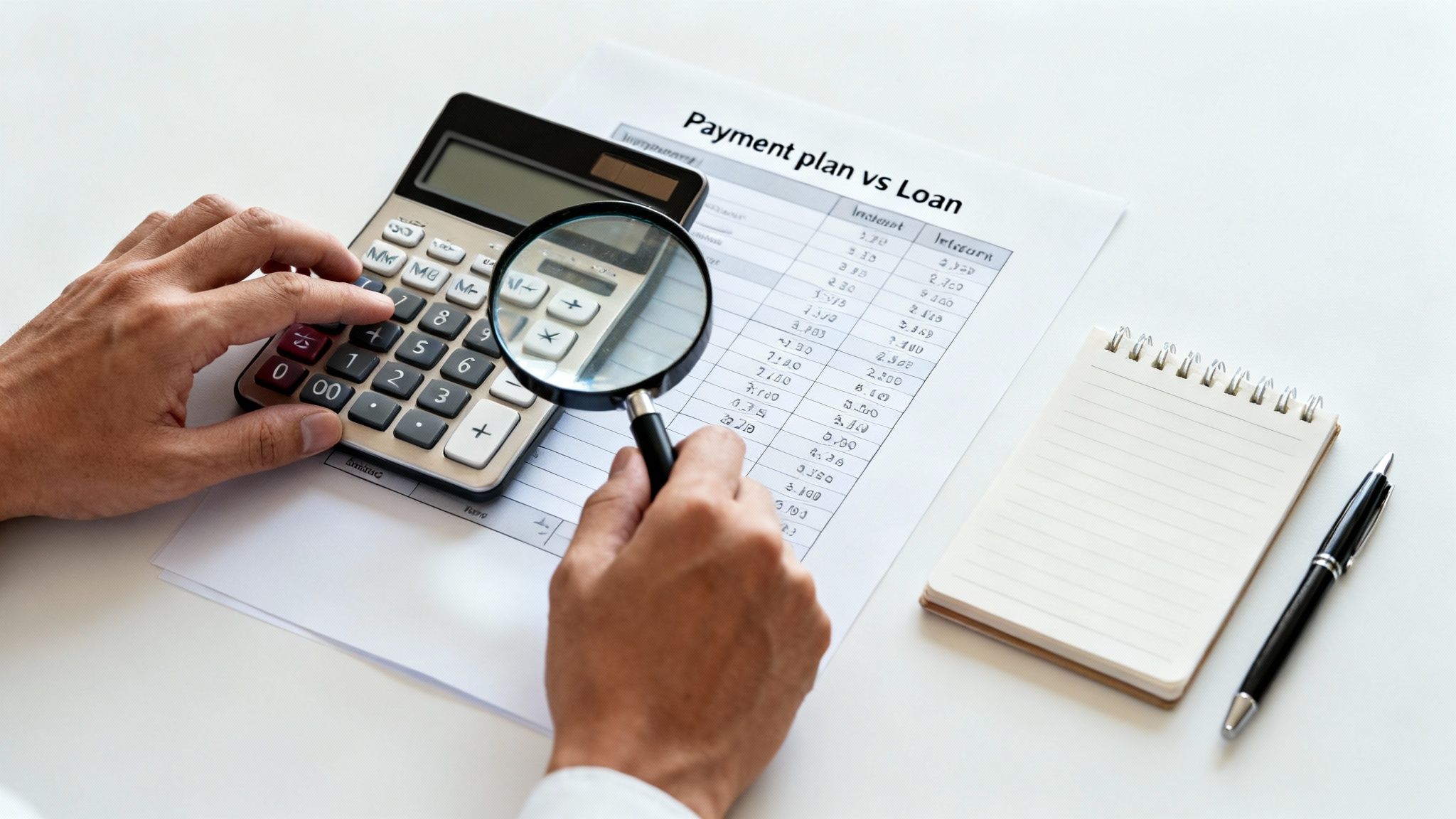
An ATO payment plan provides vital flexibility, but it is not a free service. Understanding the true cost is essential for making a sound financial decision. The primary cost is the General Interest Charge (GIC), which accrues on your outstanding debt until it is paid in full.
Understanding General Interest Charge (GIC)
The GIC is the interest the ATO applies to unpaid tax debts to compensate for the delay in payment. The rate is set quarterly and is typically higher than standard commercial loan rates.
Crucially, the GIC compounds daily. This means each day, interest is calculated on the total outstanding amount, which includes the original debt plus any interest already added. This daily compounding can cause the debt to grow significantly faster than simple interest.
Interest vs. Penalties
It is important to distinguish between interest and penalties.
GIC (Interest): Applied directly to the unpaid tax debt itself.
Penalties: Applied for failing to meet an obligation, such as lodging a return or statement on time.
A payment plan addresses the tax debt and the accruing GIC. It does not automatically cancel any separate penalties that have already been applied for late lodgement. Requesting remission of penalties is a separate process. For more details on these charges, you can read our article on penalties for late tax returns.
Managing or Changing an Active Plan
Securing an ATO payment plan is the first step; managing it effectively is the next. Proactive communication is key to keeping your plan active, especially if your financial circumstances change.
The most important rule is to contact the ATO before you miss a payment. The ATO is generally more willing to be flexible with taxpayers who are upfront about their difficulties.
What to Do If Your Circumstances Change
If you anticipate being unable to meet a payment, you must act quickly. You can contact the ATO to request a variation to your ATO payment plan.
Assess Your Finances: Determine what you can realistically afford to pay.
Contact the ATO Early: Use the same channel you used to set up the plan (online services or phone). The business line is 13 72 26.
Explain Your Situation: Clearly state why you need to change the plan. For example, a Brisbane-based retailer might have experienced a sudden drop in sales.
Propose a Solution: Suggest a revised payment amount or a short-term deferral and be prepared to explain why it is sustainable.
The Consequences of Defaulting
Defaulting on your arrangement by missing payments without prior contact is a serious issue. A single missed payment can void the entire agreement, allowing the ATO to resume tougher debt collection actions.
This can include:
Garnishee Notices: Legal notices sent to your bank or employer, directing them to send funds directly to the ATO.
Director Penalty Notices (DPNs): Making company directors personally liable for certain company tax debts.
Legal Action: Including court proceedings that could lead to bankruptcy for an individual or liquidation for a company.
Proactive management and open communication are the best ways to avoid these severe outcomes. Poor financial oversight can quickly escalate a manageable situation.
FAQs: ATO Payment Plans
1. Can I set up a payment plan for any amount of tax debt?
Yes, but the process varies. For smaller debts (e.g., under $200,000 for businesses), you can often arrange a plan online. For larger debts, the ATO will require a more detailed assessment of your financial situation and capacity to pay.
2. What happens if I miss a single payment?
If you miss a payment without contacting the ATO beforehand, they can cancel your plan immediately and restart more direct collection activities. Always communicate with the ATO if you anticipate a problem.
3. Can I pay off my plan early?
Yes, and it is encouraged. There are no penalties for early repayment. Paying off the debt faster will reduce the total amount of General Interest Charge (GIC) you pay, as it is calculated on the daily outstanding balance.
4. Will an ATO payment plan affect my credit score?
An ATO payment plan itself does not directly impact your credit score. However, the ATO can report significant business tax debts (usually over $200,000 and more than 90 days overdue) to credit reporting bureaus if you are not actively managing the debt. Entering into a payment plan is considered active management and generally prevents this from happening.
5. Do I still need to lodge future tax returns and BAS on time?
Yes, this is non-negotiable. You must continue to lodge all future returns and activity statements on time and pay any new tax debts in full by their due dates. Failure to do so can lead to the cancellation of your payment plan.
Summary
An ATO payment plan is a valuable tool for managing tax debt and avoiding serious collection action. It allows you to repay your debt in manageable instalments, but it's crucial to understand that interest (GIC) will continue to accrue.
Key Takeaways:
Be Proactive: Contact the ATO as soon as you know you cannot pay on time.
Check Eligibility: Ensure you have a good compliance history with all lodgements up to date.
Understand the Costs: The General Interest Charge (GIC) compounds daily and adds to your total debt.
Communicate Changes: If your circumstances change, contact the ATO immediately to vary your plan.
Stay Compliant: You must meet all future lodgement and payment obligations to keep your plan active.
This information is general in nature and does not constitute financial advice. Your individual circumstances will determine the best course of action, and it is always recommended to seek personalised guidance from a qualified professional.
Official ATO Reference
Baron Tax & Accounting
Website: https://www.baronaccounting.com
Email: info@baronaccounting.com
Phone: +61 1300 087 213
Whatsapp: 0450 468 318

Comments